The Touchstones Fellows Program: A Tapestry, Not a Thread
By Sharon Thomas, Director of K-12 and Family Engagement Programs
The Touchstones® Fellows Program is an annual course on discussion leadership open to K-12 and higher ed educators who are using (or plan to use) Touchstones programs in their teaching or research. The program was the COVID-quarantine brainchild of Touchstones Executive Director Stefanie Takacs and Co-Founder Howard Zeiderman. With an immediate need at that time to ensure educators and their students remained meaningfully supported and connected with online programs, they wondered how to translate Touchstones discussion leadership development to an online environment. They asked themselves how that engagement might buoy the spirits of some of their Touchstones friends and volunteers across North America.
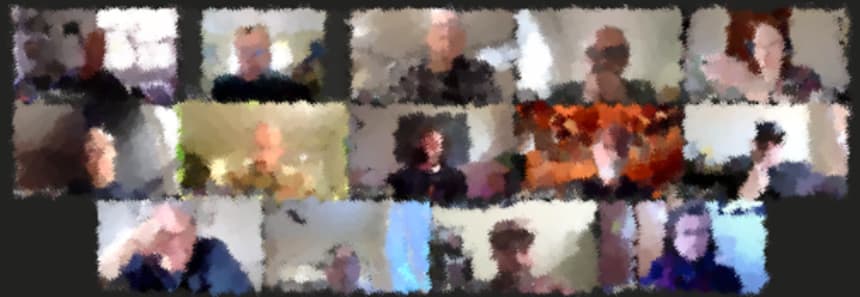
The first cohort began in 2020 with 15 participants (myself included) and the Fellows Program is now a permanent part of our ongoing professional development offerings for educators. Each cohort is led by two co-facilitators and includes educators and educational practitioners in K-12 and higher ed who work in all types of roles. Meeting once a week for 8 weeks, discussion leadership rotates among the members over the course of this program, who receive advanced support and guidance from the co-facilitators and peers who have already led a discussion in the program. The program has received rave reviews from participants; 100% give it a “would recommend” rating.
In embarking on writing this piece, I went back to review all the comments that prior Touchstones Fellows provided in their mid-course and end-of-course surveys. I wanted to highlight their voices. After reading through pages and pages of responses, I realized that the Fellows should write this article, not just me. I would typically frame this article by explaining the four goals of the program and how they benefit the group members, but instead, I will let the Fellows do that for you:
Touchstones Fellows Can Expect To
- Examine assumptions and biases
What the Fellows say:
“I learned how deeply rooted one’s discussion habits really are—we spend years building up a discussion persona, or what we believe is expected for us, and Touchstones gently helps you see what that persona really is and how it needs to change to facilitate the group’s experience and growth.”
“I have realized that I bring a lot of assumptions to a discussion, and I assume others have the same objectives/goals that I do. As a result, I can expend a lot of effort in a discussion just tearing down those assumptions to get on the same page as everyone else and begin constructive engagement.”
“This experience has made me more curious about the purpose of conversation itself. Is it ever for me? Or is it an act of service in which my role is to serve and meet the needs of my community?”
- Practice working with others, regardless of perceived similarity or difference and build community with other educators
What the Fellows say:
“I’ve grown to maybe trust my instincts a little bit more when it comes to reading people and being a participant in a conversation.”
“In the past, I have often mentally appointed someone as the smartest or most knowledgeable person in the room and look to them for approval. I now realize that I need to come to every room I join as an equal.”
“I have learned that, although I make connections to a text or topics almost instantly, I have to make decisions on what would best help the group rather than simply add my two cents.”
- Learn to better articulate ideas and formulate questions
What the Fellows say:
“I was surprised by the attitude [in the Fellows] that we can mess up and just go on. I’m somehow primed to think that everything needs to be immediately successful, and if it isn’t, then that is bad. Touchstones gives the grace to allow people to experiment.”
“The Fellows made me think about the idea of ‘allowing’—allowing time for reflection, for silence, for people to think and gather their thoughts, allowing the discussion to flow rather than directing it. Allowing, not ‘covering material.’”
“I’ve become more comfortable sharing and asking questions of the group. I’ve practiced letting go of a need to say the ‘perfect’ or ‘smart’ thing.”
- Build discussion leadership skills by facilitating one of the discussion meetings with advanced preparation and personalized support
What the Fellows say:
“I thought Touchstones would be similar to my experiences in other seminar environments, but I was so surprised by how different it was! I gained insight into the artful qualities of what discussion leadership could be. I previously didn’t know the explicit strategies and the range of artful interventions. I now center the question ‘What does the group need?’ into the qualities of what constitutes leadership.”
“This program shows you that the teacher can really step back and let the larger group take over, which is very hard when you’ve been teaching for years and years and everyone is just talking.”
“I now feel more comfortable with the discussion taking on different shapes and think of it more as a tapestry than a thread.”
As a participant in the 2020 cohort and a co-leader of the 2023 and 2024 cohorts, I experienced for myself the power of a course in discussion leadership. Focusing intensively for 8 weeks on how the group is interacting, on who needs more time or space, on who needs more encouragement—on “What does the group need for me now?”—transforms not only Touchstones circles but every interaction in our lives. Once the habit of looking outward to what’s happening with others instead of mostly focusing on your own needs or agenda, it’s (thankfully) a hard habit to break.
A new cohort of Fellows just began their work this month, led by co-founder Howard Zeiderman and Matteo Burrell, whose own doctoral work focuses on inclusive discussion. To learn more or join a future cohort, visit https://touchstones.org/workshops-training/touchstones-fellows. Digging deep into the world of Touchstones discussion leadership offers opportunities for incredible changes in relationships at school, at home, and in the community.

 Join the